I was, by necessity, on the hunt for a bargain. That is what you do when cash is low. I found myself in Marty's Liquor and Wine store in West Newton, Ma. I was under strict orders to bring home a bottle of wine for supper. Failure was not an option; it would require me to do the dishes for at least a millennium. Not relishing this prospect, I humbly asked Marty for his assistance. Without hesitation, we went to the wine department and selected a 1991 Lirac. I brought the wine home and . . . success! No dishes.
At that time, Lirac wine was a new experience for me. I enjoyed the wine and realized that I wanted to know more about it. The wine carried ripe red and dark berries on the nose. On the palate were terrific black raspberry and cherry flavors. (I also enjoyed the price. At that time it was around $11.) I went to Robert Parker's Book called Wines of the Rhone Valley, first published in 1987. At that time Mr. Parker was giving Lirac wines a "mediocre to good, but improving" rating. Fast forward to 2013, I find that Lirac wine has improved. I also discovered that Lirac wines are from the Southern Rhone; or more precisely, from a wine-growing Appellation d'Origine Controlee (AOC) situated in the low hills along the right bank of the Rhone River in the Southern Rhone wine region of France. I pinpoint the location because it is important to remember that Lirac is located directly across the Rhone River from Chateauneuf-du-Pape. Thus there is a positive soil and climate influence on what is grown in Lirac. This positive influence is well-drained gravel and the familiar stoned-studded soil that we also see in Chateauneuf-du-pape. The stones retain the heat from the day and slowly release the heat to the soil at night.
Grape varietals grown in the village of Lirac (for the red and rose wines) are Grenache Noir, Syrah, Mourvedre, Cinsault, and Carignan. The white wines are produced from Clairette, Grenache Blanc, and Bourboulenc varietals. The style of red lirac often resembles a soft Cotes du Rhone-Village. But some winemakers reach somewhat higher and try to imitate a Chateauneuf-du-Pape. This is an important point to remember since it is a reminder of how close Lirac is to Chateauneuf-du-Pape. Lirac wines have been produced in the region since pre-Roman times. Evidently the wine has some staying power – and universal appeal – since it was consumed by all classes, from royalty to peasant. Today, growers in the area number approximately 100. However, one winery does stand out. It is Domaine de la Mordoree. In 1986, the management at the Domaine made a business decision to sell all outside interests of any kind and to concentrate solely on the winery. With clear goals in mind for both the quality of the wine and the environment, the Domaine developed 60 Hectares throughout 38 different plots of land. The parcelling of land provided the Domaine with a rich, wide range of soils and microclimates. The winery personnel also have a passion for a bird called the Woodcock. The "poetical" name for the woodcock is La Mordoree. The Woodcock appears on the label.
WINESPEAK Lirac is in an ideal destination for anyone travelling to the Rhone. In addition to exploring any opportunity for the many wines that are available, there is also access to the Mediterranean climate and beauty, which are favorable to tourism. The whole environment appeals to discovering the cultural centers of Avignon, Arles, Nimes, The Pont du Gard, and the Luberon. It is 'location, location, location' at its best, as there are multiple opportunities for one-day trips. It is as easy as reserving a B&B, renting a car, and go for it. I did it in 1997 and the memories are still alive.
A Last Look at Some Summer Whites
Written by Terry Connor
Wednesday, 28 August 2013 06:22
I am told that summer only lasts 93 days. That is really not enough time to enjoy the many delightful white wines available to us here in the Lowcountry. However, if we pick up the pace, maybe we can enjoy a few extra treats, either as an aperitif or with a nice barbecue before the deadline.
Each year, Wine Spectator magazine publishes two lists. The first list is the top 100 wines of the year, and the second list is the top restaurants, WORLDWIDE, that have earned awards for wine excellence. Both of these lists require massive effort and are judged in accordance to strict guidelines. I would like to concentrate on the Restaurant list and how it pertains to us here in the Lowcountry.
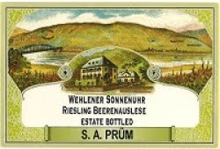
The label pictured here is from the winner in The White Wine Category of the 28th Annual Hilton Head Island Food and Wine Festival. The wine was chosen in a blind tasting by the judges from all the entries in this category. This was indeed an awesome task, as there were several hundred white wine entries and only sixteen hours of judging available to choose the "Best of Show" in this category. What the judges found in this case was a wine produced from 100% Riesling, bright gold in color, a fruity nasal quality, and flavors of lemon and peach.
Dorothy Gaiter and John Brecher wrote wine articles for the Wall Street Journal up until just a few years ago. They no longer write about wine and I miss them. John and Dorothy knew how to take the "work" out of their jobs and replace it with fun. Where ever they landed I sincerely hope that all is well.